Measurement
The Closed-Loop XR Model
Mar 16, 2025

One of the biggest shifts happening in immersive marketing right now is structural. XR is moving away from isolated activations and toward connected systems that continue creating value long after the initial interaction. This shift changes how brands should think about designing immersive experiences.
What if XR was not just an experience, but a repeatable customer loop?
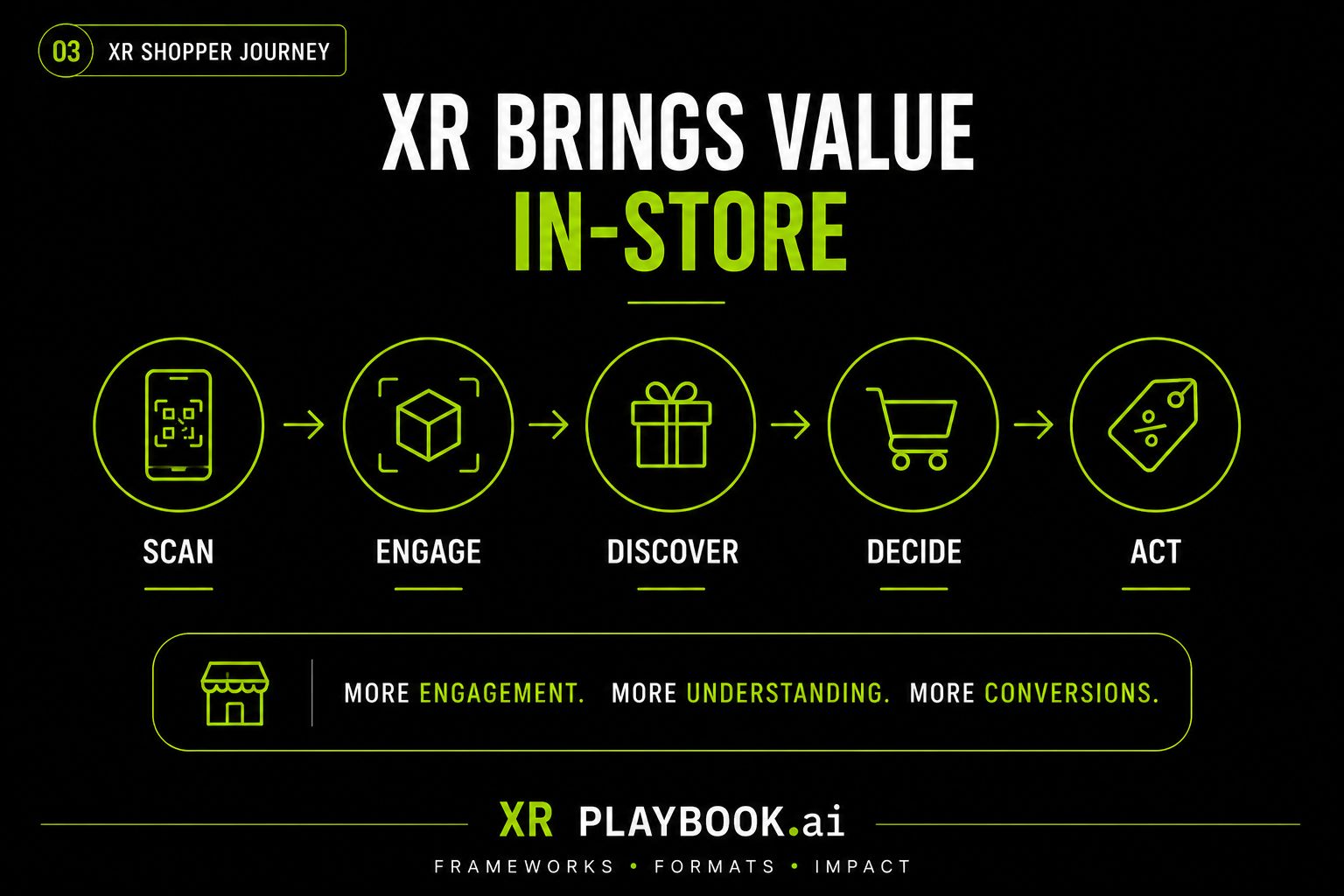
Every XR journey needs a structured entry point. The first interaction is often triggered by something physical or contextual, such as packaging, a shelf display, a QR code, or digital media placement. This “scan” moment acts as the gateway into the immersive journey and determines whether the customer moves forward into deeper engagement.
Interaction is where value starts to build. Once inside the experience, play becomes the mechanism for holding attention. Whether through gamification, storytelling, or product exploration, interaction turns passive attention into active engagement. This is where emotional connection and memory are built.
Reward creates motivation and momentum. The strongest immersive journeys offer something in return. That could be a prize, exclusive content, or a valuable brand interaction. Reward increases motivation and encourages completion, while creating a stronger value exchange between brand and customer.
Capture transforms engagement into business value. This is where XR shifts from experience into strategy. Capturing opt-ins, behavioural signals, or first-party data creates measurable commercial value beyond the interaction itself. Brands move from simply entertaining users to building valuable customer intelligence.
Re-engagement is what closes the loop. The most strategic XR journeys do not stop after the first interaction. They reconnect the customer through CRM, loyalty, promotions, or future campaigns. This turns XR into a repeatable loop where one interaction creates the next, extending value over time.
The future of XR is not campaign-based. It is system-based. Brands that understand this will stop designing isolated experiences and start building immersive loops that create attention, data, loyalty, and repeat engagement over time.